
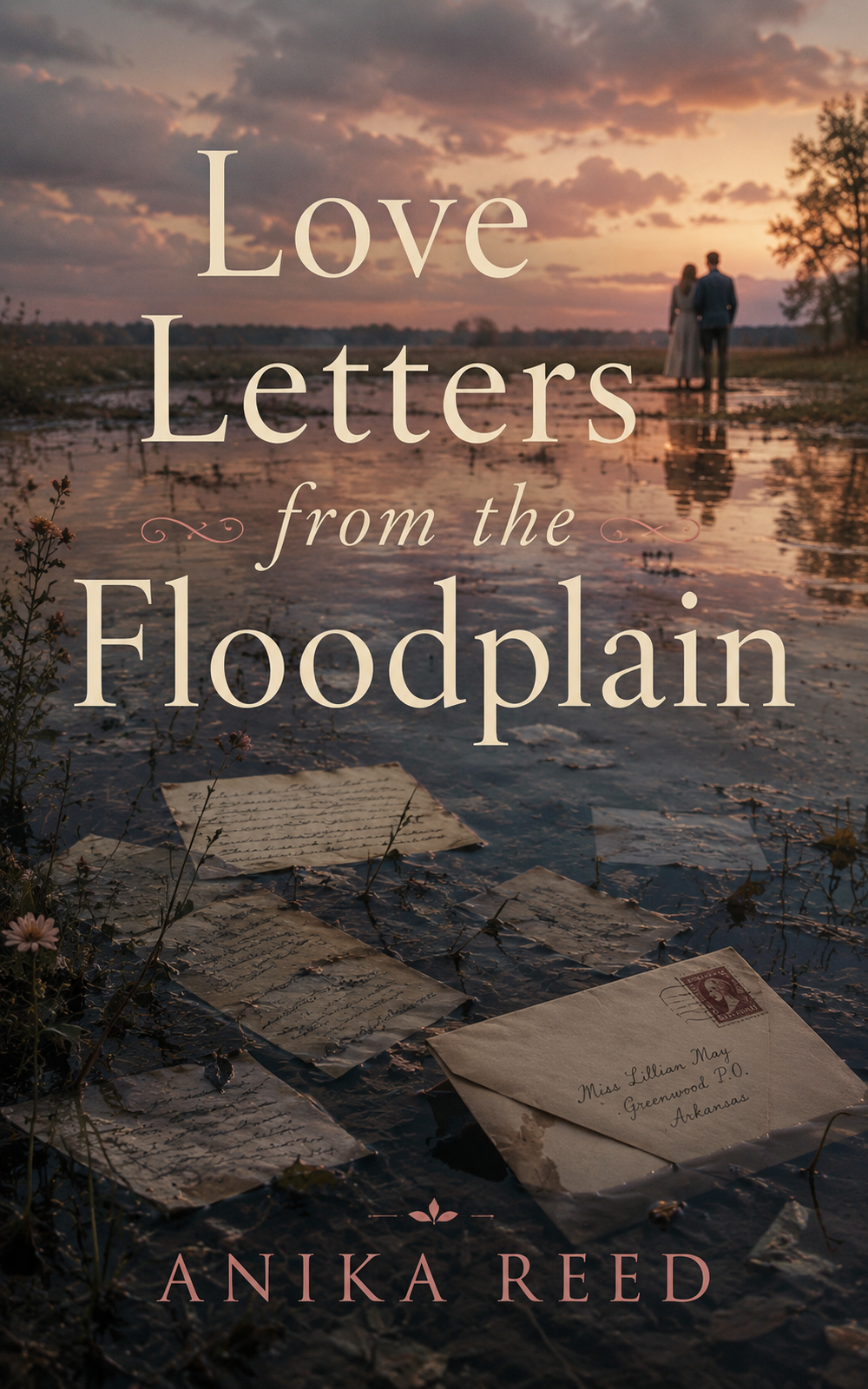
In Love Letters from the Floodplain, Anika Reed reunites two former partners during a state project to relocate homes from a river community facing repeated floods. Celia Marr is an engineer responsible for assessing which structures can be moved; Rowan Bell runs the local historical society and opposes a plan that would scatter the neighborhood. Their shared past gives every professional disagreement an emotional undertow, while the changing landscape prevents nostalgia from becoming a simple solution.
Reed’s strongest choice is to make both characters competent and partly right. Celia understands that preservation without safety can become abandonment disguised as tradition. Rowan recognizes that relocation plans often treat communities as collections of buildings rather than networks of memory, care, and access. Their arguments arise from values and work rather than from contrived misunderstanding, giving the romance an adult seriousness.
The setting is equally persuasive. Water marks remain on church walls, mailboxes are mounted above previous flood levels, and residents keep plastic tubs packed during hurricane season. Reed uses these details to show adaptation without romanticizing danger. The river is beautiful, but beauty does not cancel insurance costs, mold, or the exhaustion of rebuilding.
The relationship develops through letters the pair wrote but never sent after their breakup. This device is initially effective because the letters reveal how each person edited the story of their separation. Some are angry, some practical, and some embarrassingly hopeful. As the novel progresses, however, the correspondence becomes too convenient. A newly discovered letter often supplies exactly the emotional information needed for the next reconciliation scene.
Secondary characters are warmly drawn but occasionally overfunctional. Rowan’s aunt provides local history and blunt advice; Celia’s colleague exists mainly to challenge her fear of commitment. Their presence adds texture, yet the novel signals too clearly when each will deliver a lesson. The community meetings also repeat similar positions after the central conflict has been established.
Reed writes intimacy with sensitivity. Physical scenes emphasize trust, hesitation, and the history carried in familiar gestures. The erotic material belongs to the character development rather than interrupting it, though the final third softens several unresolved professional conflicts in order to clear space for the romantic conclusion.
The ending is hopeful without pretending the floodplain can be restored to an earlier state. Celia and Rowan choose a relationship shaped by change rather than protected from it. The novel’s compromises are visible, but so are its intelligence and generosity. Its best scenes understand that love cannot protect a place from change, only help people decide how to meet it together.
Verdict
Our verdict: A tender, uneven romance whose environmental setting and mature emotional stakes distinguish a familiar second-chance story. At 3.5 out of five stars, it offers enough emotional and social specificity to outweigh its convenient letters and predictable supporting roles.
Book details
- Publisher
- Willow Current
- Publication date
- 2026