
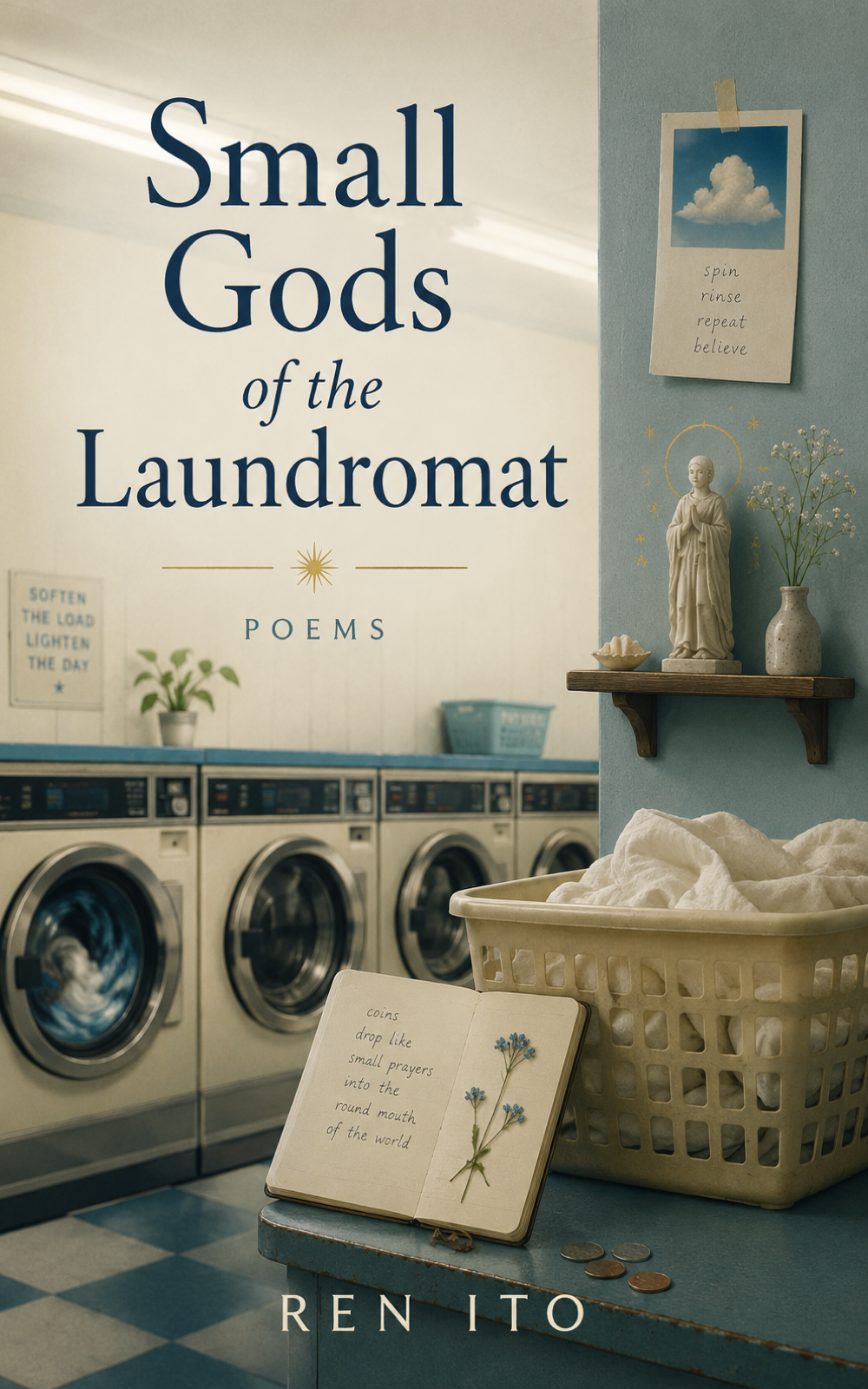
Small Gods of the Laundromat begins with an image that seems modest enough: a collection of lyric poems about apartment life, migration, vending machines, grief, and the accidental communities of shared spaces. What follows is less a puzzle to be solved than a pressure test for everyone involved. The book’s central concern is the sacred possibilities of repeated ordinary tasks. That concern appears in choices, habits, and omissions rather than in explanatory speeches, giving the narrative a welcome confidence.
The strongest element is the book’s control of form. Ito’s compressed images create surprising continuities between quarters, lint, family memory, and urban loneliness. Scenes arrive with a clear sense of purpose, but they do not feel engineered merely to move information from one place to another. Instead, details accumulate until earlier moments change meaning. The pacing is deliberate without becoming inert, and the transitions between public events and private reactions are especially assured.
Characterization benefits from the same restraint. The central figures are allowed to be intelligent, inconsistent, and occasionally unkind without the narrative rushing to excuse them. Relationships are built through work, miscommunication, shared routines, and the small negotiations by which trust either grows or fails. Even when the plot becomes elaborate, the emotional logic remains readable.
The prose is attentive to physical experience. Rooms, tools, weather, clothing, and sound are not decorative inventory; they shape what the characters can know and how they behave. Ren Ito also understands when to leave an image alone. Several of the most memorable passages end before their significance is summarized, allowing the reader to participate in the book’s meaning rather than merely receive it.
Within poetry, the book’s distinction lies in how fully technique serves subject. Familiar conventions are present, but they are treated as tools rather than guarantees. The work invites comparison with recognizable traditions while maintaining its own pace, imagery, and moral emphasis. Readers are given enough orientation to enter the book confidently, yet enough uncertainty to keep interpretation active.
That does not mean the novel is without weaknesses. A handful of very short pieces feel more like bridges than complete poems. The issue is noticeable because so much of the surrounding work is exact. Still, it does not undo the book’s larger achievement, and in some cases the slight imbalance may be the cost of an ambitious structure that refuses a simple, single explanation.
By its final movement, Small Gods of the Laundromat has earned both its complications and its quieter resolutions. The conclusion does not merely reveal information; it clarifies what the characters have been willing to see, ignore, or preserve. The book respects the consequences of its own ideas, and its emotional payoff comes from changed attention rather than from spectacle alone.
Verdict
Our verdict: Precise, playful poems that turn ordinary rituals into acts of attention. At 5.0 out of five stars, it is an exceptional achievement: controlled, memorable, and unusually complete in the relationship between its ambitions and its execution.
Book details
- Publisher
- Open Palm Poetry
- Publication date
- 2026